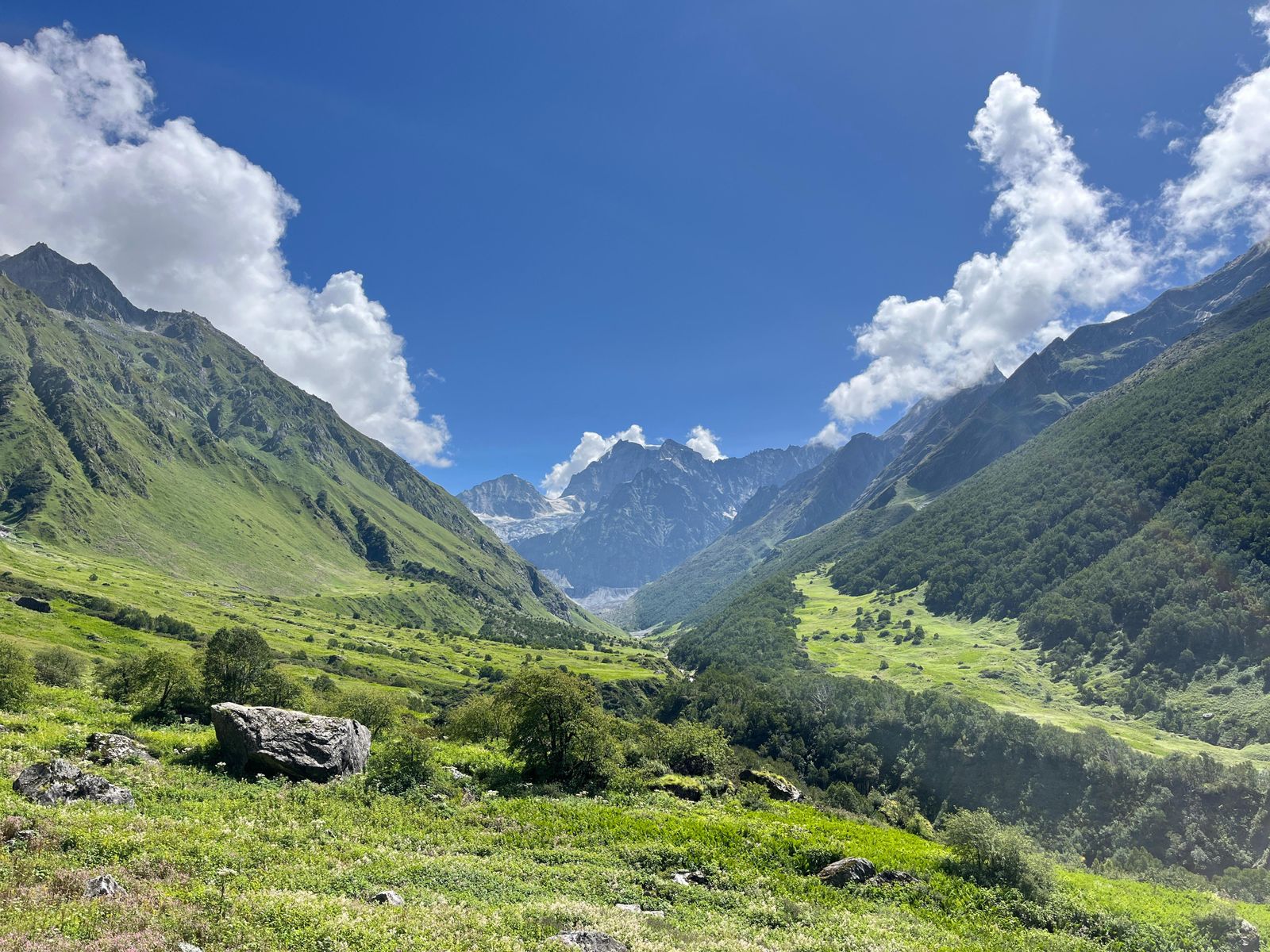
Chamoli, Uttarakhand · 11,483 ft Peak
Valley of Flowers Trek
A UNESCO World Heritage trail through India's most spectacular alpine meadow — complete 2025 guide
Plan This Trek — Free
Priya Sharma
Himalayan Trek Writer & Botanist
Hidden at the base of the Zanskar range in Chamoli district, the Valley of Flowers National Park is one of those rare places that exceeds every photograph. From July to September, the 87 sq km alpine meadow transforms into a living tapestry of colour — blue poppies, brahma kamal, cobra lilies, marsh marigolds, and primulas blooming simultaneously across a landscape ringed by snow-capped peaks. Declared a UNESCO World Heritage Site in 1982 and a National Park in 1982, the valley is accessible only on foot via a well-marked trail from Govindghat. The combination of glacial streams, waterfalls, and 500+ flowering species makes this the finest botanical trek in the Himalaya.
Route & Day-by-Day Itinerary
The classic route starts from Govindghat (6,073 ft) on the Rishikesh–Badrinath highway and ends at Ghangaria (10,171 ft), the base for both Valley of Flowers and Hemkund Sahib:
Day-by-Day
- 01Day 0 — Haridwar/Rishikesh to Govindghat (~250 km, 8–10 hrs). Overnight stay at Govindghat.
- 02Day 1 — Govindghat to Ghangaria (6,073 ft → 10,171 ft, 14 km, 6–7 hrs). Moderate trail through rhododendron forests along the Pushpawati River.
- 03Day 2 — Ghangaria to Valley of Flowers (10,171 ft → 11,483 ft, 3.5 km one-way, 2–3 hrs). Spend 3–4 hours in the valley before returning to Ghangaria.
- 04Day 3 — Optional: Hemkund Sahib (14,009 ft, 6 km one-way) — a glacial lake Sikh shrine. Strenuous but deeply rewarding.
- 05Day 4 — Ghangaria to Govindghat (descent, 4–5 hrs). Drive back to Joshimath or Haridwar.
Alpine wildflowers in full bloom — the meadow peaks between late July and mid-August
Best Time to Visit
The valley is open only from June 1 to October 31 (it remains snow-covered outside this window). Here is what each month offers:
- 01June — Early-season flowers begin to bloom, fewer crowds, some snow patches still visible on higher slopes.
- 02July–August — Peak bloom period. Maximum species in flower simultaneously. The meadow is at its most photogenic. Expect some rain — this is monsoon season.
- 03September — Late-season blooms, clearer skies than July–August, fewer leeches on the trail. Still excellent variety.
- 04October — Most flowers gone. Vivid autumn colours on the surrounding slopes. Valley closes November 1.
Pro Tip: Peak Bloom Timing
The absolute peak bloom window is typically July 20 – August 20. During this period, brahma kamal (Saussurea obvallata) — the state flower of Uttarakhand — blooms at the valley's upper reaches. Arriving before 9 AM in the valley gives you the best light and the fewest other trekkers. The valley closes at 5 PM.
What You'll See: 500+ Species
The Valley of Flowers contains one of the highest concentrations of Himalayan flora in the world. Botanist Frank Smythe first documented the valley in 1931, naming it in his book of the same title. Key species to spot:
- 01Brahma Kamal (Saussurea obvallata) — sacred lotus of the Himalaya, blooms July–August
- 02Himalayan Blue Poppy (Meconopsis aculeata) — rare and elusive, found near the valley's upper edge
- 03Cobra Lily (Arisaema jacquemontii) — distinctive hooded flower common near stream banks
- 04Marsh Marigold (Caltha palustris) — golden carpets along the Pushpawati River in June
- 05Primula species — at least 12 varieties found across different altitudes in the valley
- 06Himalayan Balsam (Impatiens sulcata) — pink cascades across wet rocks and stream edges
- 07Geranium, Anemone, Potentilla, and Polygonum species fill the remaining meadow
The Pushpawati River running through the valley floor — glacial meltwater feeds the meadow year-round
Permits & Entry Fees
Valley of Flowers National Park has a structured entry system:
- 01Entry fee: ₹150 per person per day for Indian nationals; ₹600 for foreign nationals
- 02Camera fee: ₹50 (still camera); ₹500 (video camera)
- 03No overnight camping inside the valley is permitted — all trekkers must return to Ghangaria
- 04Entry ticket purchased at the park gate — no advance booking needed
- 05Forest department guides available at Ghangaria for ₹600–800/day (recommended for first-timers)
Essential Packing Tips
This is a monsoon trek — rain gear is non-negotiable. Pack a waterproof poncho or hardshell jacket, waterproof trekking shoes, gaiters, and quick-dry clothing. Leeches are active in July–August — wear full-length pants and apply salt or tobacco-based repellent on shoes. The trail to Ghangaria is well-maintained with tea stalls but carry snacks for the valley itself where no vendors are permitted.
Important Restrictions
Plucking, collecting, or removing any plant material from Valley of Flowers National Park is a criminal offence under the Wildlife Protection Act. Camping and overnight stays inside the park boundary are strictly prohibited. Drones require special permission from the Forest Department. Stay on marked trails to protect the fragile alpine meadow.
Watch Before You Go
Hand-picked searches — click to find the best vlogs on YouTube.
On Instagram
Real photos and reels from travellers who've been there.
Browse #ValleyOfFlowers
See real trek photos & reels
#valley of flowers·#uttarakhand·#monsoon trek·#unesco·#himalayan trek·#wildflowers
AI Trip Planner
Plan your Valley of Flowers Trek trip
in 30 seconds — free
Day-by-day itinerary, hotels, transport and budget — personalised by AI.