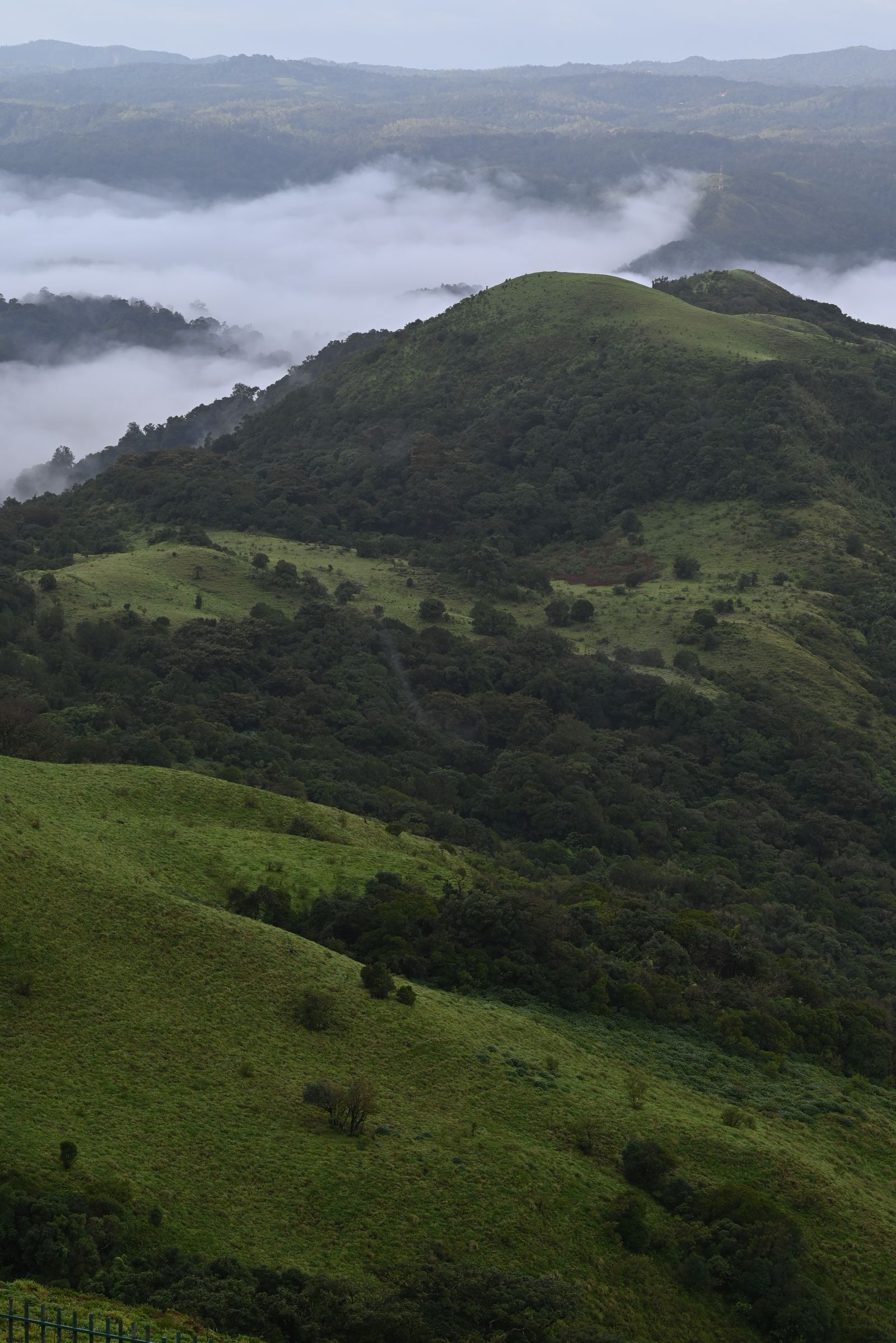
Kodagu District, Karnataka · 3,500 ft
Coorg Weekend Escape
Misty coffee hills, waterfalls, and elephant encounters — the complete guide to India's most atmospheric hill station for 2025
Plan This Trek — Free
Ananya Krishnaswamy
South India Travel Writer & Coffee Enthusiast
Kodagu district — better known as Coorg — is South India's Scotland: perpetually mist-wrapped, intensely green, and suffused with the scent of coffee and cardamom. Sitting at 900–1,800 metres in the Western Ghats, Coorg produces 30% of India's total coffee output and 60% of its pepper. The landscape is a patchwork of coffee estate canopy, bamboo thickets, and streams that tumble off the Brahmagiri range into the Kaveri and its tributaries. Unlike the Himalayan hill stations, Coorg has resisted over-development — large tracts remain under estate and forest cover, giving it an intimacy that places like Mussoorie or Ooty lost decades ago.
Top Things to Do in Coorg
Coorg rewards slow travel more than tick-box sightseeing. Here are the experiences worth planning your trip around:
- 01Coffee Plantation Walk — Most plantation homestays offer a morning walk through their estate with an explanation of the coffee processing cycle. Watch pickers harvesting in November–January. Free when staying at a plantation property.
- 02Abbey Falls — 70m waterfall 10 km from Madikeri, surrounded by coffee estates and pepper vines. Most photogenic October–November when the falls are at full flow. Entry ₹50.
- 03Raja's Seat, Madikeri — The historic sunset viewpoint of Coorg's capital. On clear evenings, the Western Ghats ridge extends 30 km to the west. Free. Best at 5:30–6:30 PM.
- 04Dubare Elephant Camp — Forest department elephant camp on the Kaveri River, 35 km from Madikeri. Morning activities (6–8 AM): elephant bathing, feeding, interaction. ₹500–₹1,000 per person.
- 05Brahmagiri Wildlife Sanctuary Trek — 2–5 hour treks into the shola grasslands. Home to gaur (Indian bison), Malabar giant squirrel, and over 300 bird species. Entry permit ₹200.
- 06Talacauvery — The source of the Kaveri River at 1,276 m on the Karnataka–Kerala border. Sacred site for Kodavas. The spring erupts on Tula Sankramana day (mid-October) — a major pilgrimage moment.
- 07Iruppu Falls — 170m cascading waterfall in Nagarhole National Park. Combined with an evening wildlife safari makes a full day. 80 km from Madikeri.
Coffee estates in full harvest season — Coorg produces nearly a third of India's entire coffee crop
Where to Stay: Plantation Homestays
The plantation homestay is Coorg's killer feature — a style of accommodation almost unique to this region. You stay in a working estate with the planting family, eat home-cooked Kodava food, and walk into the coffee fields before breakfast:
- 01Rainforest Retreat, Galibeedu — 45 acres of certified organic coffee, pepper, and cardamom estate near Madikeri. ₹7,500–₹12,000 per couple per night including all meals.
- 02Vivanta Coorg (Taj), Madikeri — The region's top luxury property. Treehouse-style villas on a coffee estate, infinity pool overlooking the valley. ₹18,000–₹35,000 per night.
- 03Honey Valley Estate, Kakkabe — Family-run, 3,000-ft altitude, mist-covered valley. One of Coorg's most atmospheric small properties. ₹3,500–₹5,500 per couple with meals.
- 04Orange County Resort, Siddapura — Luxury eco-resort with 66 independent cottages set in a working plantation. Famous for its farm-to-table restaurant. ₹16,000–₹28,000 per night.
- 05Budget homestays near Kushalnagar or Virajpet: ₹1,500–₹3,000 per couple. Basic but access to plantation walks.
The Coorg Coffee Experience
Coorg grows Arabica and Robusta varieties under the shade of silver oak trees — what growers call "shade-grown coffee". The harvest season (November–January) is the best time to see pickers at work and attend a "cherry to cup" demonstration. Most estates sell freshly roasted beans at ₹300–₹600/250g — significantly better quality and value than supermarket Coorg coffee. The local specialty is "Coorg kaapi" — filter coffee made with chicory and served in a traditional davara-tumbler set.
Abbey Falls at full flow — the most visited waterfall in Coorg, best seen October–December
Kodava Food: Coorg's Distinct Cuisine
The Kodava community has a culinary tradition completely distinct from other Karnataka cuisines — rich pork, river fish, and hand-pounded spice pastes dominate:
- 01Pandi Curry — Coorg's most famous dish. Slow-cooked pork in a paste of roasted spices and Kachampuli (Coorg's sour Garcinia vinegar). Served with Akki Roti (rice flatbread).
- 02Kadambuttu — Steamed rice dumplings, the Kodava equivalent of idli. Softer and more neutral-flavoured, meant to absorb the richness of pork or chicken curries.
- 03Noolputtu — String hoppers (rice noodle patties) traditionally served for breakfast with coconut milk and curry. Order at any traditional homestay.
- 04Bamboo Shoot Curry — Wild bamboo shoots cooked in coconut milk and mustard seeds. A monsoon seasonal speciality.
- 05Coorg Honey — Multi-flora honey from the Western Ghats, collected from cardamom and coffee flowers. Best bought directly from Brahmagiri Honey Society, Virajpet.
Coorg Packing Checklist
Coorg's misty, plantation climate requires different preparation than a beach or desert trip:
Clothing
- Light rain jacket or poncho (it drizzles even in "dry" season)
- Full-sleeve shirts for plantation walks (mosquitoes at dusk)
- Sturdy closed-toe shoes or ankle boots for estate walks
- One warm layer for evenings (temperatures drop to 10–14°C at night)
- Quick-dry trousers — trails can be muddy after rain
- Sandals for around the homestay/resort
Essentials
- Insect repellent (DEET-based, particularly for forest treks)
- Binoculars for bird-watching at Brahmagiri Sanctuary
- Cash — most homestays and small restaurants are cash-only
- Offline map (Google Maps works but save the area offline)
- Reusable water bottle — filter water available at most homestays
- Camera with extra SD card — plantation dawn light is exceptional
Monsoon (June–September): Roads Can Be Treacherous
Coorg receives 3,000–4,000 mm of annual rainfall, most of it concentrated in the monsoon. Landslides are common on the Madikeri–Virajpet and Madikeri–Kushalnagar roads. Several homestays close in peak monsoon. If you want lush green landscapes and don't mind occasional road closures, September is excellent — the rains ease, estates are impossibly green, and waterfalls are thundering. Otherwise, October–March is the ideal window.
Watch Before You Go
Hand-picked searches — click to find the best vlogs on YouTube.
On Instagram
Real photos and reels from travellers who've been there.
Browse #CoorgLife
See real trek photos & reels
#coorg·#kodagu·#karnataka·#coffee plantation·#weekend getaway·#hill station·#western ghats
AI Trip Planner
Plan your Coorg Karnataka trip
in 30 seconds — free
Day-by-day itinerary, hotels, transport and budget — personalised by AI.