Punjab · Langar, Lassi & the Light on the Sarovar
Amritsar: What Nobody Tells You
I went to see a temple. I stayed for the langar, the lassi, and the 4am silence.
Plan This Trek — Free
Elena Vasquez
Latin America & Asia Travel Blogger
I arrived at the Golden Temple at 4:30 in the morning because someone on the train told me to. A Sikh gentleman in a blue kurta, travelling with his teenage daughter, had seen me studying my guidebook and said simply: go before the sun rises, go before anyone tells you what to think of it. I did not sleep that night. I did not regret it.
The Swarna Shatabdi from Delhi pulls into Amritsar Junction in the early afternoon, and the city announces itself immediately. Even at the station, there's a smell specific to this place — mustard oil frying somewhere, marigolds, something warm and yeasty I couldn't identify until the second day, when I traced it to the langar ovens near the temple's eastern entrance. I'd booked a room at Mrs. Bhandari's Guesthouse on the Cantonment Road, a ten-minute auto-rickshaw ride that cost me ₹80. I stopped negotiating when the driver looked tired and just paid what he asked. My host, a retired schoolteacher named Gurdeep who runs the guesthouse with his wife, gave me tea without asking and then an itinerary without being asked. 'Amritsar is not a city that sleeps or shows off,' he told me. 'It just runs.' Three days later, I understood exactly what he meant.
The temple that doesn't ask anything of you
The Harmandir Sahib is smaller than you expect and more overwhelming than any photograph suggests.
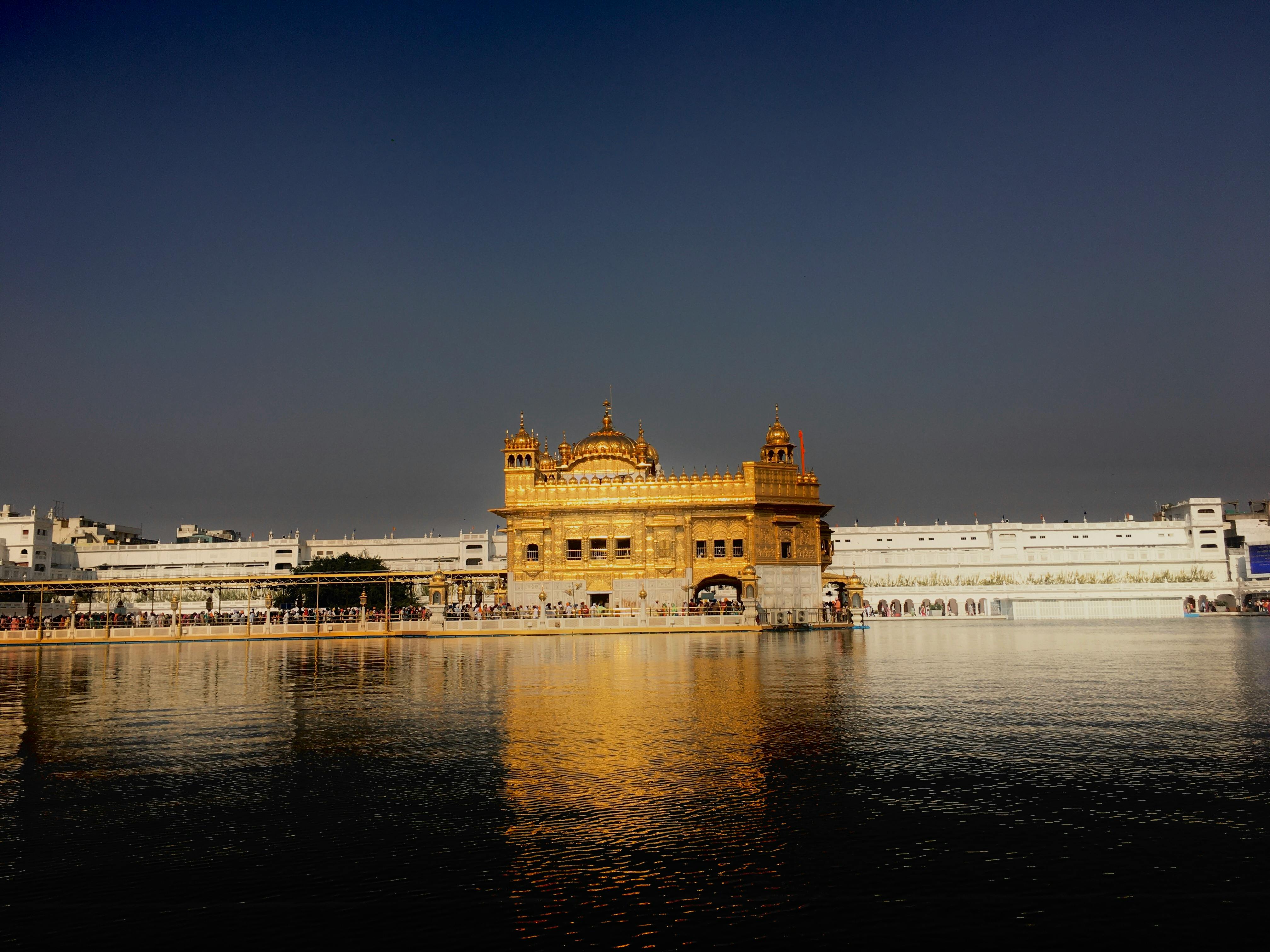
You remove your shoes in a hall that smells of damp marble and camphor, wash your feet in a shallow pool, cover your head with one of the orange scarves handed out near the entrance — free, always free — and step through. What hits first is not the gold. It's the sound. The kirtan, the Sikh devotional music played live by musicians inside the sanctum, runs 24 hours a day and is broadcast across the entire complex. At 4:30am with maybe 200 people in the marble parikrama instead of the 100,000 who pass through on a busy afternoon, the music sits differently. The Sarovar — the sacred pool surrounding the sanctum — is completely still. The reflection of the gold dome in the dark water is perfect: not a mirror image, but something better. It looked as though the building had been placed inside the water rather than on the land above it. I sat on the marble and listened for almost two hours before I thought about taking a photograph.
Go between 4am and 6am — this is not negotiable
The Golden Temple never closes. The 4am–6am slot is when priests perform the opening ceremony (the Parkash), the kirtan is most intimate, and you can walk the full parikrama without shuffling behind a tour group. By 8am it's busy; by 10am the queue for the sanctum is 2–3 hours. I spent four hours there on my first night without noticing the time pass. My phone battery died. I didn't mind.

The sanctum at 4:30am — still enough to hear the kirtan echo across the Sarovar.
I ate for free. Then I ate for free again.
The langar is the largest free kitchen in the world, and nobody makes a fuss about it.
The Golden Temple's langar feeds 80,000 to 100,000 people on an ordinary day. During Gurpurab and other major festivals, that number climbs past 200,000. None of this is announced with a sign and an exclamation mark. You walk into a large hall, sit cross-legged on the floor in a long row, and within minutes the sewadars — volunteers who serve as an act of devotion — move down the lines with buckets of dal, roti, kheer, and sabzi. The food is not remarkable in itself. The dal is simple. The roti is plain. But I ate here three times, the last at 11pm when the hall was running at the same pace as noon, and something about the completeness of it — no menu, no bill, no decision required — made it feel like the most civilised meal I've encountered on any continent. A retired civil servant sitting beside me on my second visit told me he comes every Thursday. He lives in Chandigarh, two hours away. He comes for the dal.
Outside the langar, Amritsar has one of Punjab's most specific and unreplicable food cultures. The kulcha here is not the kulcha you get in Delhi or Mumbai. At Kulwant Singh Kulcha Land on Lawrence Road — open from 8am, expect a queue by 8:15 — it arrives stuffed with spiced potato and paneer, cooked in a tandoor until the crust is shatteringly crisp, and served with chole so dark they've been simmering since before dawn. Breakfast for two: ₹200. The Amritsari fish fry — battered sole fried in mustard oil with ajwain — is best eaten standing at the stalls on the northwest side of the temple complex, where families buy it wrapped in newspaper for ₹120 a plate. And the lassi. I need to talk about the lassi. Gurdas Ram, on the lane directly behind the Harmandir Sahib, has been making it the same way since 1947: thick enough to eat with a spoon, topped with a slab of malai, served in a terracotta kulhar you return after drinking. It costs ₹60. I had it every single day.
What I didn't expect — and wish someone had told me
The Wagah Border ceremony is on every tourist list, and it deserves to be. But nobody mentions that the grandstand fills by 4pm and the ceremony doesn't start until sunset — around 5:30pm in winter, 6:30pm in summer. If you arrive at 5pm, you're watching from the back rows. Take a shared jeep from near the Golden Temple at 3:30pm (₹40–60), arrive early, and sit on the right side of the stadium for the best view of the Pakistani side responding. Also: Jallianwala Bagh is more devastating than any description prepares you for. The bullet holes are still in the walls. The well is still there — the one people jumped into to escape the 1919 massacre. Give it an hour, not fifteen minutes. It earns that time.
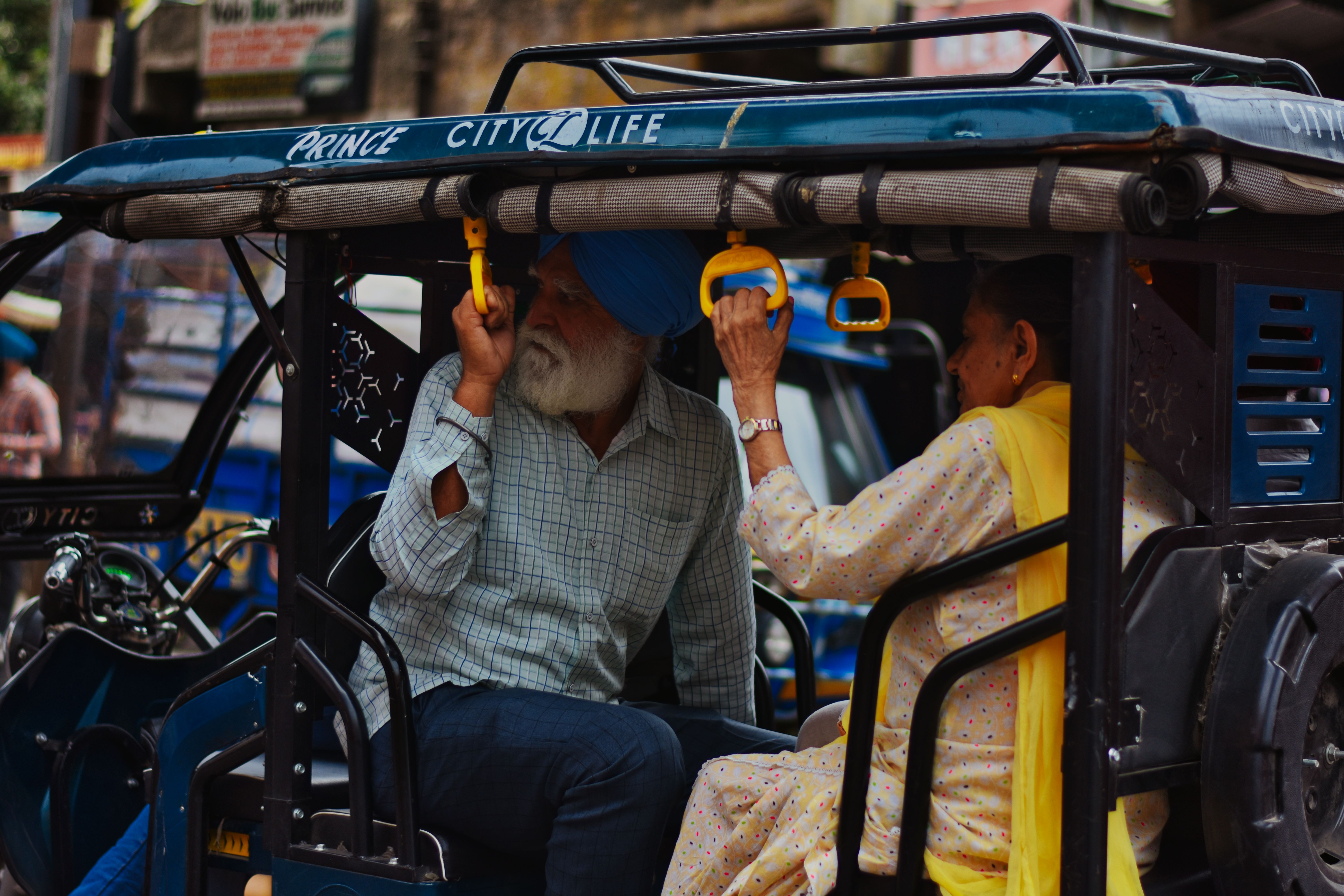
Heritage Walk leading to the temple — the lane that has fed pilgrims and travellers for four centuries.
Getting there, getting around, where I'd actually stay
The logistics are easier than people make them sound.
Train is the right choice if you're coming from Delhi. The Swarna Shatabdi Express (12029) leaves New Delhi at 7:20am and reaches Amritsar at 1:35pm — six hours, ₹900–₹1,200 for AC Chair Car. The scenery across the Punjab plains in the morning light is reason enough to take it over a flight. If you're flying, ATQ airport is 11km from the city center; an Ola runs ₹250–₹300. Within the city, auto-rickshaws are honest and cheap by Indian-city standards — ₹30–₹80 for most central trips. The Golden Temple area is entirely walkable if you're staying near Lawrence Road or Heritage Street. I rented a cycle on my second day for ₹150 and covered Jallianwala Bagh, the Partition Museum, and two gurudwaras without needing a vehicle. The Partition Museum, opened in 2017 in the Town Hall building on Mall Road, is genuinely excellent — one of the best museums I've visited in India — and almost nobody seems to know it exists.
Where I'd stay next time (and why)
- 01Budget (₹700–₹1,500/night): Mrs. Bhandari's Guesthouse, Cantonment Road — run by the same family since the 1970s, colonial-era rooms with ceiling fans and actual wooden furniture, best breakfast in Amritsar included at ₹150 extra. Gurdeep will give you a real itinerary over tea.
- 02Mid-range (₹2,500–₹4,500/night): Hotel Ritz Plaza on Mall Road — clean, central, rooftop view of Heritage Walk from the upper floors. The staff arrange Wagah transport without overcharging.
- 03Splurge (₹7,000+/night): Hyatt Regency Amritsar — 15 minutes from the temple by car, the pool is excellent after a full day on marble floors, and the concierge can arrange a 4am temple visit with a local guide who knows when the priests perform each ceremony.
Book the Shatabdi 2–3 weeks ahead
Train 12029 (New Delhi → Amritsar) sells out in AC class every weekend from October through February. The return train (12030, departs Amritsar 4:45pm, reaches Delhi 10:30pm) fills even faster. Book on IRCTC the moment you fix your dates. If you're coming from Chandigarh (3 hrs, frequent trains) or Pathankot (4 hrs), local trains are fine and don't need advance booking.
The city that gave me back something I didn't know I'd lost
This is not a place that performs wonder. It simply is.
I left Amritsar on a Wednesday morning on the 7:05am Shatabdi back to Delhi. My bag smelled of mustard oil and marigolds. The night before, I'd gone back to the Golden Temple at 9pm — the gold under the floodlights is a different sight entirely, almost electric against the November sky, the water around it turned ink-dark — and sat in the parikrama for an hour without doing anything except listening. Around me, families were eating tiffins they'd brought from home. Children were asleep across their parents' laps. A group of elderly women in bright salwar-kameez were singing along quietly to the kirtan. Nobody was performing for anybody else. That's what I keep trying to explain to people who ask me about Amritsar: the Golden Temple doesn't stage an experience for you. It doesn't adjust itself for tourists. It simply does what it has always done — feeds people, plays music, keeps the lights on — every hour of every day, regardless of who is watching. After three days of sitting inside that continuity, you start to understand why people come back every year for the rest of their lives. It's not nostalgia. It's recognition.
How many days do I actually need in Amritsar?
Three full days is the right number. Day one for the Golden Temple — morning and night are completely different experiences and both are necessary. Day two for Jallianwala Bagh, the Partition Museum (budget three hours, not one), the food trail on Lawrence Road, and the lanes behind Heritage Street. Day three for Wagah Border at sunset, one last morning at the temple, and the Gurdas Ram lassi before your train. Two days works if you're disciplined. Four days is completely justified if you want to slow down.
Is Amritsar worth it for solo travellers?
Yes — and specifically because the Golden Temple creates a natural, unpressured gathering point. I met other solo travellers in the langar queue, in the temple's free accommodation sarai (the gurdwara offers basic rooms to pilgrims, worth knowing), and at the stalls outside. The city is not performatively touristy; most of the people you encounter are locals going about their lives, which makes wandering feel easy and honest. Women travelling alone: the temple complex and Heritage Street feel genuinely safe at all hours, including 4am.
What I packed that actually mattered
Scarf or dupatta
required for head covering at the temple (they provide orange scarves, but yours is cleaner and you'll use it all day)
Slip-on shoes
you remove them 10+ times daily at temples and gurudwaras, laces become an enemy
Small daypack only
the temple's free cloak room is reliable but crowded; leave valuables at the guesthouse
Reusable water bottle
the temple has clean filtered water stations throughout the complex
₹500 in small notes
auto-rickshaws, kulcha stalls, and lassi shops don't break large notes easily
Light jacket for October–February evenings
the marble parikrama holds cold air even when the afternoon was warm
Camera with a low-light capable lens
tripods not allowed inside the complex, and you'll want to shoot the 4am reflection
Antacid tablets
the food is extraordinary but the volume you will consume is genuinely unreasonable
'The Golden Temple is not a monument. It is a meal, a song, and a silence, running continuously. You can leave. It doesn't.' — Gurdeep Singh, guesthouse owner, Lawrence Road, Amritsar
Watch Before You Go
Hand-picked searches — click to find the best vlogs on YouTube.
On Instagram
Real photos and reels from travellers who've been there.
Browse #AmritsarDiaries
See real trek photos & reels
#amritsar travel guide·#golden temple amritsar·#amritsar food kulcha lassi·#wagah border ceremony·#punjab india travel·#jallianwala bagh history·#harmandir sahib sikh pilgrimage
AI Trip Planner
Plan your Amritsar trip
in 30 seconds — free
Day-by-day itinerary, hotels, transport and budget — personalised by AI.